
Introduction
Organizations across industries face continuous pressure to innovate faster, scale operations reliably, and integrate intelligent capabilities into their core offerings. Moving beyond traditional software delivery models requires building AI-powered applications, transitioning to cloud-native infrastructure, and automating software pipelines. Meeting these demands requires more than adopting isolated tools; it calls for a cohesive technical strategy supported by experienced engineering partners.
Navigating this complex digital landscape requires an integrated approach that bridges software engineering, infrastructure operations, and organizational capability development. This is where Cotocus.cn functions as a practical technology and engineering partner. By combining expertise in artificial intelligence, custom software development, cloud architecture, DevOps, site reliability engineering (SRE), platform engineering, and corporate training, Cotocus.cn helps organizations design, build, modernize, and operate intelligent software platforms with clarity and precision.
Understanding Modern Enterprise Software Development
Modern enterprise software development has evolved far beyond traditional application coding. Today, building resilient software requires a comprehensive focus on product engineering, cloud-native architecture, microservices, application programming interfaces (APIs), continuous integration and continuous deployment (CI/CD) pipelines, comprehensive observability, and stringent security guardrails.
Architectural decisions made early in the development lifecycle directly impact an organization’s ability to scale, secure, and maintain its digital products. Rather than treating infrastructure, operations, and security as secondary concerns, modern engineering teams integrate them directly into the development workflow. This ensures that software systems can adapt to evolving business requirements while maintaining high performance and reliability under production loads.
AI Software Development Company
Integrating artificial intelligence into business applications requires specialized technical capabilities. Partnering with an experienced AI Software Development Company allows organizations to transform experimental machine learning concepts into scalable, production-ready systems.
Production AI development encompasses several key areas:
- AI-Powered Applications: Building software that leverages machine learning models for predictive analytics, classification, and intelligent decision-making.
- Natural Language Processing (NLP): Implementing text analysis, sentiment tracking, and automated linguistic processing.
- Intelligent Search and Retrieval: Enhancing internal knowledge management and customer-facing search capabilities using advanced vector databases and semantic search algorithms.
- AI Workflow Automation: Streamlining repetitive operational processes by embedding intelligent decision loops into existing enterprise software.
Building a production-ready AI application requires rigorous data engineering, careful model selection, robust security protocols, continuous performance evaluation, and strict cost management. Without these safeguards, AI implementations often struggle to transition successfully from proof-of-concept stages to reliable enterprise tools.
Generative AI Development Services
Generative artificial intelligence has introduced powerful new capabilities for text generation, code creation, document summarization, and interactive assistance. However, successfully deploying Generative AI Development Services requires a structured engineering approach rather than a superficial implementation.
A sustainable generative AI lifecycle follows a methodical path:
- Use Case Definition: Identifying specific business bottlenecks where large language models (LLMs) add genuine value.
- Data Preparation: Assembling clean, contextual, and secure datasets for retrieval-augmented generation (RAG) or fine-tuning.
- Model Selection: Evaluating proprietary versus open-source LLMs based on performance, cost, latency, and data privacy requirements.
- Application Architecture: Designing secure middleware, prompt orchestration layers, and API integrations.
- Evaluation and Guardrails: Establishing mechanisms to monitor response accuracy, mitigate hallucinations, and prevent data leakage.
- Deployment and Monitoring: Tracking token consumption, inference latency, and system reliability in production environments.
By adhering to a disciplined implementation framework, organizations can harness generative AI effectively while mitigating technical and operational risks.
AI Agents and Intelligent Automation
The emergence of AI agents represents a significant shift from basic conversational chatbots to autonomous execution systems. While conventional automation relies on strict deterministic logic and hardcoded rules, AI agents utilize LLMs to reason, plan, and execute multi-step workflows dynamically.
Key characteristics of agentic systems include:
- Tool Usage: The ability to invoke external APIs, query databases, and execute code snippets based on user intent.
- Context Management: Retaining conversational state and operational memory across extended task sequences.
- Planning and Decomposition: Breaking down complex business requests into sequential sub-tasks.
- Human Oversight: Incorporating human-in-the-loop checkpoints for critical actions, financial transactions, or data modifications.
While AI agents offer powerful capabilities for complex automation, deterministic automation remains preferable for predictable, rule-bound workflows where absolute consistency and zero error margins are mandatory.
Custom Software Development Company
Off-the-shelf software solutions frequently fall short of meeting unique organizational workflows, data security mandates, or specialized integration requirements. Partnering with a Custom Software Development Company allows businesses to build bespoke digital platforms tailored precisely to their operational needs.
Custom software development covers a wide spectrum of solutions:
- Enterprise Web and Mobile Applications: Developing scalable, high-performance user interfaces and backend systems.
- API Development and Integration: Connecting disparate enterprise systems, legacy databases, and third-party services securely.
- Internal Tools and Portals: Building custom operational dashboards and workflow management systems to enhance internal productivity.
- Legacy Modernization: Refactoring aging monolithic applications into modern, maintainable architectures.
A structured custom development process ensures that requirements are carefully analyzed, secure coding practices are enforced, and thorough testing protocols are executed prior to production deployment.
SaaS Product Development Company
Building a software-as-a-service (SaaS) product requires a specialized engineering focus that extends beyond traditional web application development. Collaborating with an experienced SaaS Product Development Company helps entrepreneurs and enterprises navigate the complexities of multi-tenant architecture, subscription management, and continuous product evolution.
Critical components of SaaS product development include:
- Multi-Tenant Architecture: Designing secure data isolation models that allow multiple customers to share infrastructure efficiently without compromising data privacy.
- User Identity and Access Management: Implementing robust authentication, role-based access control (RBAC), and single sign-on (SSO) capabilities.
- Subscription and Billing Integration: Managing recurring billing cycles, usage-based pricing tiers, and account lifecycle states.
- Scalability and High Availability: Ensuring the product can handle sudden user growth without performance degradation.
- Product Analytics: Tracking user engagement and feature adoption to inform future product roadmaps.
Designing a scalable SaaS platform requires careful upfront architectural planning to support long-term growth and commercial success.
Cloud Consulting Services
Migrating to the cloud or modernizing existing cloud infrastructure requires deep architectural expertise to avoid common pitfalls such as uncontrolled spending, security misconfigurations, and performance bottlenecks. Comprehensive Cloud Consulting Services help organizations design and operate resilient cloud environments.
Cloud consultants assist enterprises across major platforms, including Amazon Web Services (AWS), Microsoft Azure, and Google Cloud, by focusing on:
- Cloud Strategy and Architecture Assessment: Evaluating existing IT assets and designing optimal migration or modernization roadmaps.
- Cloud-Native Engineering: Utilizing containers, serverless computing, and managed services to build elastic applications.
- Security and Compliance: Implementing robust identity management, encryption standards, and compliance frameworks.
- Cost Optimization: Analyzing resource utilization, rightsizing infrastructure, and eliminating cloud waste.
A well-architected cloud environment provides the agility, resilience, and scalability necessary to support modern digital workloads.
DevOps Consulting Services
Organizational velocity depends heavily on efficient software delivery pipelines. However, many engineering teams struggle with manual deployment bottlenecks, environment drift, and communication silos between development and operations personnel. Professional DevOps Consulting Services help organizations streamline their software delivery lifecycle.
Effective DevOps transformation requires a balance of people, process, technology, automation, and culture:
- Continuous Integration and Continuous Delivery (CI/CD): Automating code building, testing, and deployment to reduce release friction.
- Infrastructure as Code (IaC): Managing infrastructure definitions programmatically using tools like Terraform or OpenTofu.
- Containerization and Orchestration: Standardizing application packaging and deployment using Docker and Kubernetes.
- Observability: Implementing centralized logging, metrics collection, and distributed tracing.
DevOps is not simply a collection of tools; it is an ongoing cultural and operational commitment to collaboration, automation, and continuous improvement.
SRE Consulting Services
While DevOps focuses primarily on software delivery velocity and collaboration, Site Reliability Engineering (SRE) focuses on system availability, performance, and operational resilience. Specialized SRE Consulting Services help organizations maintain stability in complex, distributed production environments.
Core SRE practices include:
- Service Level Objectives (SLOs) and Indicators (SLIs): Defining measurable reliability targets based on user experience.
- Error Budgets: Balancing the velocity of feature releases with the need for system stability.
- Incident Management and Post-Incident Reviews: Establishing structured protocols for resolving outages and conducting blameless root-cause analyses.
- Capacity Planning: Anticipating resource demands to prevent unexpected infrastructure exhaustion.
SRE bridges the gap between software development and operations, ensuring that systems scale reliably under unpredictable production conditions.
Platform Engineering Services
As cloud and DevOps toolchains have grown increasingly complex, development teams often find themselves overwhelmed by infrastructure configuration tasks. Platform Engineering Services address this challenge by building internal developer platforms (IDPs) that abstract underlying infrastructure complexity.
Key components of platform engineering include:
- Golden Paths: Establishing standardized, pre-approved architectural patterns and templates for common development tasks.
- Self-Service Infrastructure: Empowering developers to provision environments and deploy code securely through internal developer portals.
- Standardized Guardrails: Embedding security, compliance, and cost controls directly into platform workflows.
- Developer Experience (DevEx): Reducing cognitive load and enabling development teams to focus on writing business logic rather than managing infrastructure.
Platform engineering transforms infrastructure into a managed product, enhancing both developer productivity and operational governance.
Digital Transformation Consulting
True digital transformation involves more than adopting new software tools; it requires a fundamental rethinking of how technology, business strategy, and organizational culture intersect. Digital Transformation Consulting helps enterprises modernize legacy systems, adopt cloud and AI technologies, and streamline operations.
Successful digital transformation initiatives focus on:
- Legacy Modernization: Safely transitioning outdated mainframe or monolithic applications to modern, modular architectures.
- Data-Driven Decision Making: Unifying disparate data sources to provide actionable business intelligence.
- Process Automation: Eliminating manual administrative friction through intelligent software workflows.
- Cultural Alignment: Preparing internal teams to embrace new technologies and collaborative work models.
Transformation initiatives must remain closely aligned with measurable business objectives to deliver sustainable long-term value.
Corporate DevOps Training
Implementing advanced technology toolchains and modern engineering practices is impossible without upskilling internal teams. Corporate DevOps Training bridges internal knowledge gaps and accelerates the adoption of modern engineering workflows.
Effective training programs move beyond generic theoretical instruction by offering:
- Skill-Gap Assessments: Evaluating current team competencies to tailor training curricula.
- Practical Hands-On Labs: Utilizing real-world scenarios in sandbox environments to reinforce learning.
- Team-Based Workshops: Aligning training sessions with the organization’s specific toolchain and architecture.
- Continuous Learning Pathways: Establishing ongoing educational frameworks to keep pace with rapid technological evolution.
Targeted corporate training empowers internal engineering teams to operate modern cloud, DevOps, and SRE environments with confidence.
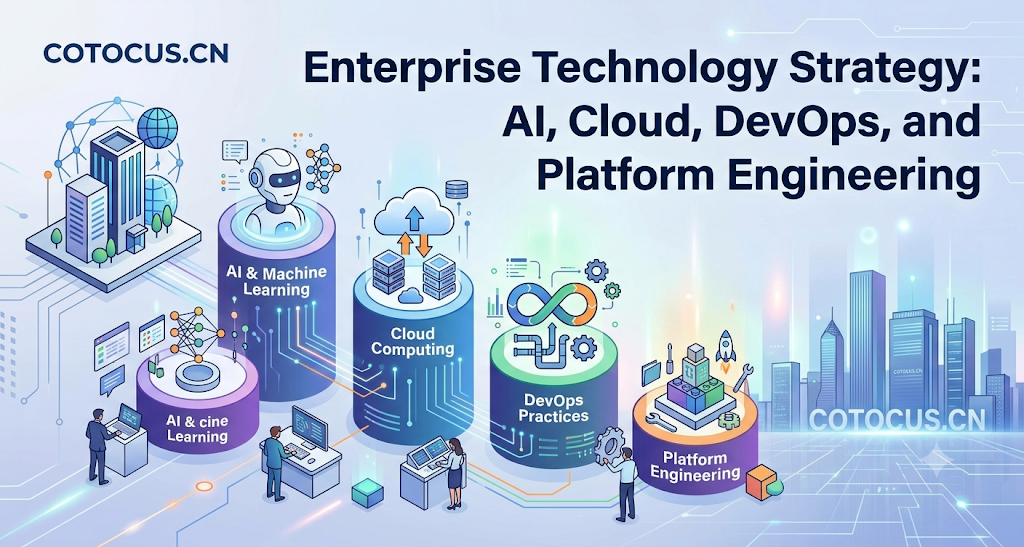
Connecting AI, Cloud, DevOps, SRE and Platform Engineering
Modern digital engineering requires an integrated approach where individual disciplines reinforce one another.
The progression of modern engineering operations follows a logical flow:
$$\text{AI \& Software Development} \downarrow \text{Cloud Infrastructure} \downarrow \text{DevOps \& CI/CD} \downarrow \text{Platform Engineering} \downarrow \text{SRE \& Observability} \downarrow \text{Continuous Optimization}$$
When these disciplines operate as a cohesive unit rather than isolated silos, organizations achieve superior deployment velocity, heightened system reliability, and seamless integration of intelligent features.
Choosing the Right Technology Service
| Business Requirement | Relevant Service |
| Build AI-powered applications | AI Software Development |
| Integrate LLMs or AI agents | Generative AI Development Services |
| Build a custom application | Custom Software Development Company |
| Launch a SaaS product | SaaS Product Development Company |
| Modernize cloud infrastructure | Cloud Consulting Services |
| Improve software delivery | DevOps Consulting Services |
| Improve system reliability | SRE Consulting Services |
| Build internal engineering platforms | Platform Engineering Services |
| Modernize business technology | Digital Transformation Consulting |
| Upskill engineering teams | Corporate DevOps Training |
Selecting the appropriate service depends entirely on an organization’s specific operational goals, technical maturity, and current business challenges.
Common Enterprise Technology Challenges
Organizations pursuing modernization frequently encounter predictable obstacles:
- Legacy Constraints: Monolithic codebases that resist rapid updates and integration.
- Delivery Bottlenecks: Manual deployment processes that slow time-to-market.
- Operational Blind Spots: Inadequate observability leading to prolonged outage identification times.
- Skill Shortages: Internal teams struggling to keep pace with cloud, AI, and DevOps advancements.
- Uncontrolled Cloud Spend: Migrating workloads without proper resource optimization or cost governance.
Addressing these challenges requires a methodical engineering strategy and experienced technical partnership.
How Cotocus.cn Supports Modern Technology Initiatives
Cotocus.cn acts as a practical technology and engineering partner for startups, enterprises, and digital-first organizations. By offering comprehensive expertise across AI software development, generative AI, custom software engineering, SaaS product creation, cloud consulting, DevOps, SRE, platform engineering, digital transformation, and corporate training, Cotocus.cn helps clients navigate complex technological transitions.
Whether an organization needs to build an intelligent AI platform, modernize legacy cloud infrastructure, or upskill internal engineering teams, Cotocus.cn provides the technical guidance and execution capability required to achieve sustainable success.
FAQ Section
- What services does Cotocus.cn provide for enterprise technology modernization?Cotocus.cn provides AI software development, generative AI implementation, custom software engineering, SaaS product development, cloud consulting, DevOps and SRE consulting, platform engineering, digital transformation consulting, and corporate DevOps training.
- How do AI software development services benefit businesses?AI software development enables organizations to embed predictive analytics, intelligent automation, and machine learning models directly into production software applications.
- What is the difference between DevOps and SRE consulting?DevOps focuses primarily on software delivery velocity, CI/CD automation, and cross-team collaboration, whereas SRE focuses on system reliability, performance monitoring, service level objectives, and operational resilience.
- When should an organization engage a SaaS product development company?An organization should engage a SaaS specialist when building multi-tenant applications that require secure data isolation, subscription billing management, and high scalability.
- What are the primary goals of platform engineering services?Platform engineering aims to reduce cognitive load on developers by building internal developer platforms, establishing golden paths, and providing self-service infrastructure provisioning.
- How does cloud consulting help optimize enterprise IT costs?Cloud consultants analyze existing cloud workloads, implement rightsizing strategies, configure automated scaling, and eliminate resource waste to improve cloud financial management.
- Why is corporate DevOps training important for engineering teams?Training bridges internal skill gaps, accelerates the adoption of automated toolchains, and aligns team capabilities with modern cloud-native architectures.
- What is the role of RAG in generative AI development?Retrieval-augmented generation connects large language models to secure external data sources, ensuring that generated responses remain grounded, accurate, and contextually relevant.
Conclusion
Achieving long-term digital competitiveness requires combining software engineering excellence, intelligent AI capabilities, resilient cloud infrastructure, and disciplined operational practices. Organizations that approach modernization holistically are better positioned to scale operations, adapt to market shifts, and deliver exceptional user experiences.
Explore Cotocus.cn comprehensive technology and engineering services today to discover how a strategic partnership can support your organization’s digital journey.

