
Introduction
When you travel internationally, insert a local SIM card, or connect via an eSIM profile, your mobile device connects to a foreign wireless network almost instantly. Behind this seamless handoff lies a complex system of international telecommunications standards, numbering structures, and network identifiers. For telecommunications professionals, software developers, network researchers, and curious travelers alike, understanding how these codes work is essential for analyzing global connectivity.
Investigating the organizations behind network identifiers requires structured reference tools. Tools like an MCC MNC Lookup help professionals connect raw numeric codes with their assigned network operators. Whether you are building software applications, conducting telecommunications research, or simply trying to understand how global wireless routing functions, knowing how to interpret mobile identifiers provides valuable clarity into the underlying infrastructure of global telecommunications.
The Foundation of Mobile Network Identifiers
To understand how mobile devices discover and connect to wireless networks, we must look at the standardized identifiers defined by international telecommunications bodies, notably the International Telecommunication Union (ITU) under Recommendation E.212. These standards ensure that mobile devices can uniquely identify home networks and partner roaming networks anywhere in the world.
The core components of a mobile network identifier include:
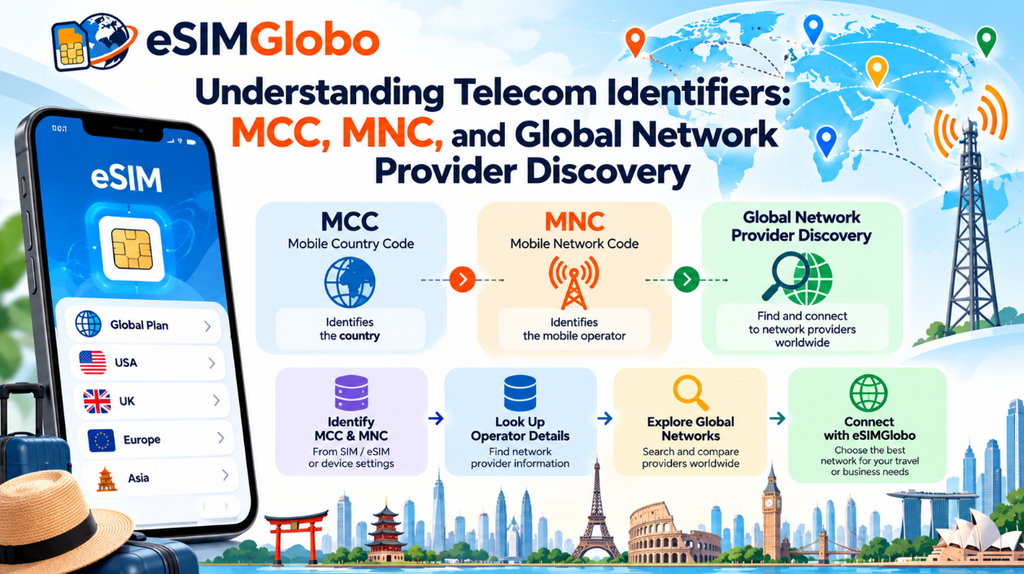
- MCC (Mobile Country Code): A three-digit code that identifies the country or unique geographic area of the mobile subscriber or network.
- MNC (Mobile Network Code): A two- or three-digit code following the MCC that identifies the specific mobile network operator within that country.
- PLMN (Public Land Mobile Network): The complete network identifier formed by combining the MCC and the MNC (MCC+MNC).
When a device powers on or loses connection to its home network, it scans the radio spectrum for broadcasted PLMN identifiers. By performing a PLMN Code Lookup, a network engineer or researcher can determine which specific operator is broadcasting a given signal, even if the network is operating under a commercial brand name that differs from its legal corporate identity.
However, an assigned code does not automatically guarantee active commercial availability, current network coverage, or public access. Official assignment records reflect administrative allocations managed by national regulators or international bodies, which may change over time due to corporate acquisitions, network shutdowns, or spectrum reallocations.
Finding the Organization Behind an Assignment
Navigating telecommunications data often starts with an unformatted code sequence captured from a network scan or configuration file. Researchers need reliable ways to connect these codes to the legal entities responsible for them. This is where a structured Mobile Network Operator Directory becomes invaluable.
When investigating a network identifier, researchers typically examine several attributes:
- Assigned Entity: The official organization, corporation, or regulatory body holding the code allocation.
- Geographic Scope: The country, territory, or specialized administrative region covered by the assignment.
- Network Status: Whether the assignment is active, reserved, or returned to the numbering authority.
- Source Documentation: References to official national numbering plans or ITU updates that verify the record.
Maintaining this level of transparency is critical. A reliable Telecom Operator Database provides clear source references and historical change logs, helping users understand when an assignment was last verified. Because corporate structures in telecommunications change frequently through mergers, rebranding, and wholesale restructuring, having access to verified assignment history prevents analytical errors.
Exploring Network Assignments Across Geographic Regions
Telecommunications numbering resources are organized primarily by geographic regions, though exceptions exist for satellite systems, international maritime services, and specialized networks. For researchers analyzing connectivity across borders, exploring Mobile Network Codes by Country offers a systematic way to compare regional numbering plans.
Different nations allocate and manage their numbering resources through designated national regulatory authorities. For example, North American numbering practices differ structurally from European or Asian regulatory frameworks regarding MNC digit lengths and assignment granularity. A comprehensive Mobile Country Code List serves as the foundational reference index for sorting these regional allocations.
When exploring codes by country, it is important to distinguish between regulatory assignments and commercial availability. An operator may hold a valid code assignment without operating a standalone radio access network, or they might utilize shared infrastructure arrangements. Researchers must look beyond the raw numbers to understand the actual operational footprint in any given territory.
Understanding Operators, Brands, and Network Relationships
One of the most common points of confusion in telecommunications research is the distinction between a network infrastructure owner, a code assignee, a wholesale provider, and a retail consumer brand.
- Mobile Network Operators (MNOs): Companies that own physical wireless infrastructure, hold spectrum licenses, and operate core network equipment.
- Mobile Virtual Network Operators (MVNOs): Service providers that do not own licensed radio spectrum or physical towers; instead, they lease wireless capacity wholesale from MNOs.
When exploring an MVNO Directory, researchers will notice that many virtual operators share network codes with their host infrastructure providers, while others operate with distinct identifiers depending on regulatory requirements and core network integration levels. Furthermore, retail commercial brands often bear little resemblance to the underlying corporate entities holding the official network code assignments. Recognizing these distinctions prevents misinterpretations when analyzing market competition and wholesale agreements.
Navigating Global Telecom Directories and eSIM Services
As international travel and remote work continue to grow, connectivity solutions have expanded beyond traditional physical roaming SIM cards. Embedded SIM (eSIM) technology allows users to provision digital profiles onto compatible devices without swapping physical cards.
Researching digital connectivity providers requires access to structured data regarding supported destinations, coverage partners, data allowances, and network compatibility. A specialized eSIM Provider Directory can help users compare consumer-facing digital connectivity options. However, it is important to separate consumer research from technical network research. While an eSIM directory focuses on retail plans, pricing, and destination coverage, technical directories focus on underlying network identifiers, routing codes, and regulatory assignments. Platforms such as eSIMGlobo provide independent directories designed to help users navigate both telecommunications identifiers and provider information in a structured format.
Developer Integration and Programmatic Telecom Data Access
For software engineers, telecommunications platforms, and IoT deployment managers, manual lookups are often impractical. Applications that manage global connectivity profiles, validate roaming connections, or enrich telemetry data require programmatic access to reference records.
Integrating telecom data into automated workflows typically involves querying an MCC MNC Lookup API. While a robust API can streamline data retrieval for applications ranging from fraud detection systems to multi-network IoT routers, developers must ensure that the underlying data source is regularly updated, properly documented, and sourced from authoritative ITU and regulatory records. When evaluating developer tools, technical teams should verify response schemas, rate limits, and data freshness guarantees before production deployment.
Data Limitations and Verification Practices
Telecommunications data is dynamic. Mergers, acquisitions, bankruptcies, and regulatory updates cause network codes to change frequently. Relying on unverified third-party summaries can lead to outdated conclusions.
To ensure analytical accuracy, researchers and developers should follow a practical verification checklist:
- Cross-reference code assignments with official national regulatory authorities or ITU publications whenever possible.
- Check the last verification date of any record in a telecom database.
- Confirm whether a listed code represents a live cellular network, an experimental assignment, or a retired allocation.
- Distinguish between the commercial brand marketing a service and the underlying network operator holding the PLMN assignment.
By maintaining rigorous data hygiene and consulting transparently sourced directories like eSIMGlobo, professionals can navigate the complexities of global telecommunications with confidence.
Frequently Asked Questions
What is the difference between an MCC and an MNC? An MCC (Mobile Country Code) is a three-digit code identifying the country or region of a mobile network, while an MNC (MNC Network Code) is a two- or three-digit code identifying the specific mobile operator within that country. Together, they form the PLMN identifier.
How does a PLMN code work in mobile communications? A Public Land Mobile Network (PLMN) code combines the MCC and MNC to uniquely identify a mobile network operator. Mobile devices scan for these broadcasted codes to determine whether they are connecting to their home network or a roaming partner.
Are all mobile network codes tied to physical cell towers? No. While traditional Mobile Network Operators own physical infrastructure and radio towers, Mobile Virtual Network Operators (MVNOs) and specialized enterprise networks may hold or share network identifiers while utilizing leased wholesale infrastructure.
Why do some countries have multiple Mobile Country Codes? Larger countries or nations with extensive overseas territories and distinct regulatory jurisdictions may be allocated more than one MCC by the International Telecommunication Union to accommodate numbering capacity.
Can an MCC MNC lookup tell me if a network is currently active? An MCC MNC lookup identifies administrative assignments and registered operator details based on official records. However, active commercial availability in a specific location depends on current roaming agreements, network coverage, and local operating status.
What is the difference between a mobile network operator and an MVNO? A Mobile Network Operator (MNO) owns and operates physical network infrastructure and spectrum licenses. A Mobile Virtual Network Operator (MVNO) leases network capacity from MNOs to offer retail services under its own brand.
How often do telecommunications network identifiers change? Assignments change whenever regulators allocate new blocks, operators merge, companies rebrand, or networks are decommissioned. Regular audits against official regulatory sources are necessary to maintain database accuracy.
What information should I look for in a telecom operator database? A reliable database should provide clear source references, verification dates, geographic scopes, assigned corporate entities, and documented historical changes for every network identifier.
Conclusion
Understanding mobile network identifiers is fundamental to modern telecommunications, software development, and global connectivity research. By examining how MCC, MNC, and PLMN codes function, professionals can better interpret wireless routing and network relationships. Utilizing independent resources and verified directories helps ensure accuracy when researching global operators and connectivity providers.

